Chase the shadow. Skip the chaos.
Extraordinary eclipse travel, thoughtfully planned.
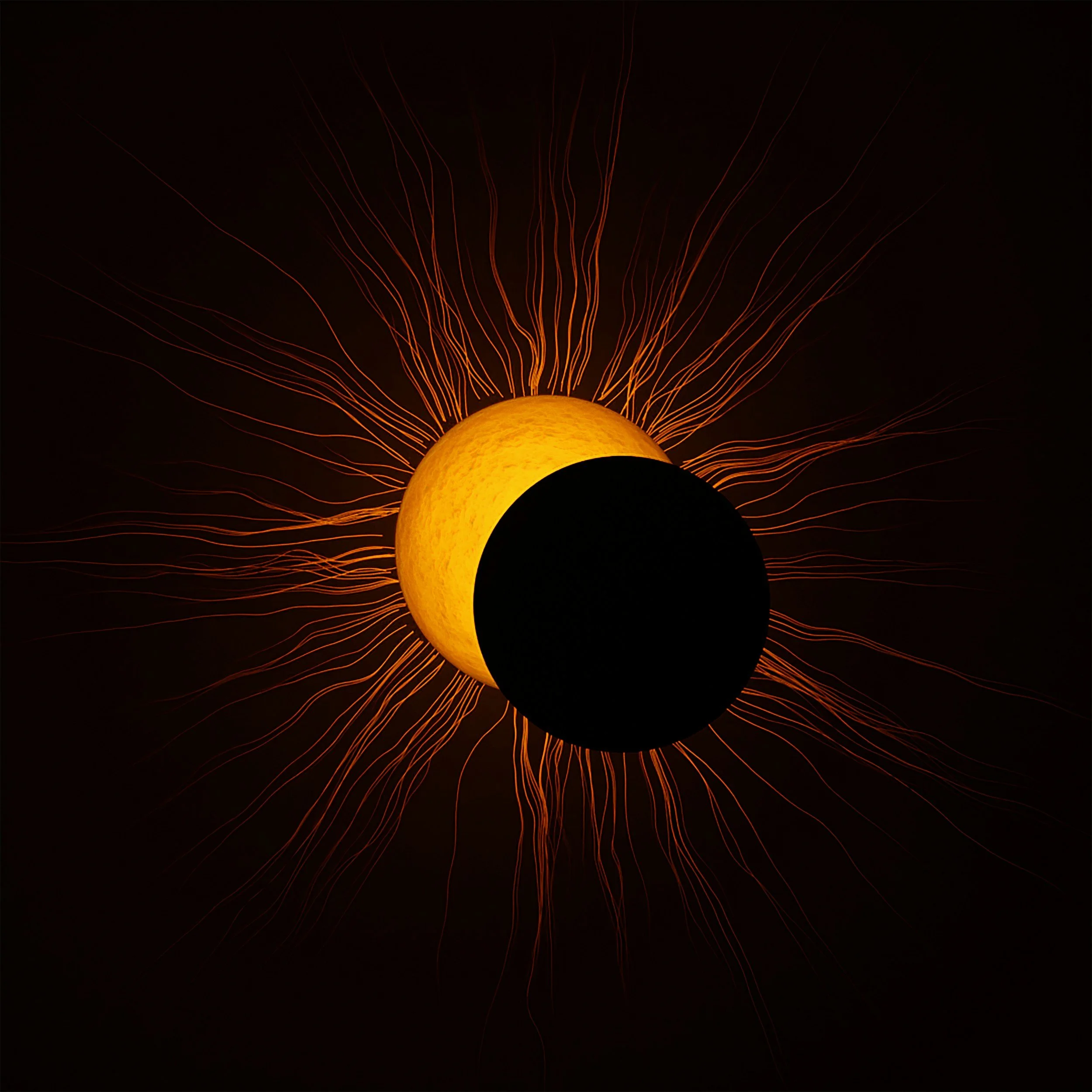
There are vacations you remember.
And then there are moments when the daylight disappears, the temperature drops, the stars come out in the middle of the day, and an entire crowd suddenly goes completely silent.
A total solar eclipse is one of those moments.
I specialize in creating thoughtfully planned eclipse journeys that combine the wonder of totality with destinations worth traveling for all on their own.
Because if we're going to chase the Moon's shadow halfway around the world, we may as well make a rather spectacular vacation out of it.

Why Travel for an Eclipse?
A partial eclipse is interesting.
A total solar eclipse is something else entirely.
For a few extraordinary minutes, the Moon completely covers the Sun. The sky darkens. The temperature changes. Stars and planets may appear. And the Sun's glowing corona becomes visible around the silhouette of the Moon.
It is beautiful, slightly surreal, and remarkably difficult to describe to someone who hasn't experienced it.
Which is probably why people who travel to see one have an unfortunate tendency to immediately start planning for the next one.

The Big One
August 2, 2027 — Egypt
On August 2, 2027, one of the most extraordinary total solar eclipses of our lifetime will cross southern Europe, North Africa, and the Middle East.
And Egypt may just have the best seat in the house.
Near Luxor, totality will last approximately 6 minutes and 22 seconds, with the Sun nearly overhead. That's an extraordinarily long period of totality—and it happens in one of the most fascinating destinations in the world.
Imagine spending your journey exploring ancient temples, tombs, pyramids, and the Nile...and then watching the midday sky go dark above Egypt.
Frankly, the Moon is showing off.
The Moon Keeps a Very Full Calendar
Eclipse travel is one vacation you don't want to plan at the last minute.
A total solar eclipse may last only a few minutes. Planning a trip to see one can begin years in advance.
Why? Because the path of totality is narrow, the best viewing destinations have a limited number of hotels, cruise cabins, guides, and transportation options—and thousands of other eclipse chasers have exactly the same date circled on their calendars.
By the time an eclipse is a few months away, the best travel options may already be gone.
For the August 2027 eclipse, it may already be too late to create the ideal trip from scratch. But don't worry. The Moon has more plans.
If seeing totality is on your travel wish list, now is the perfect time to start thinking ahead.

Shy Girl has her eye on this one.
The path of totality crosses Australia—including directly over Sydney—before continuing across parts of New Zealand. With a maximum totality of just over five minutes, this one offers some spectacular possibilities for combining an eclipse with a longer Australia or New Zealand adventure.
Planning status: It's time to start thinking about this one.

Safari + solar eclipse? Yes, please.
This eclipse crosses parts of southern Africa, including Botswana and South Africa, before continuing across the Indian Ocean and into Australia. Maximum totality will last approximately 3 minutes and 44 seconds.
For travelers who have always dreamed of an African safari, this could make an already extraordinary journey even more memorable.
Planning status: Plenty of time—but worth putting on the radar now.

Totality returns to the United States.
The path of this total eclipse crosses remote northwestern Alaska, with maximum totality lasting approximately 2 minutes and 37 seconds.
This won't be the easiest eclipse to reach—which is precisely why advance planning will matter.
Planning status: One for the serious adventure list.

Four minutes of totality. A world of possibilities.
This total solar eclipse crosses a broad swath of Africa and Asia, with maximum totality lasting just over four minutes. As travel options develop, we'll be watching for the destinations that offer the best combination of viewing conditions and an exceptional vacation experience.
Planning status: Dreaming encouraged.

For the serious dreamers.
Another chance to experience totality arrives in 2035, when the Moon's shadow crosses portions of Asia. Maximum totality will last just under three minutes.
The itineraries may not exist yet.
That's okay.
We have time.

How Far Ahead Should You Start?
For an ordinary vacation, planning a year ahead might feel early.
For eclipse travel, it can feel late.
You don't necessarily need to book five years in advance—many cruise lines, hotels, and tour operators won't even have inventory available yet. But if an eclipse is something you genuinely want to experience, I recommend getting on my radar two to three years beforehand.
That gives us time to watch for the right itineraries as they're released instead of choosing from whatever happens to be left.
Because when the Moon is responsible for the itinerary, the dates are decidedly non-negotiable.